


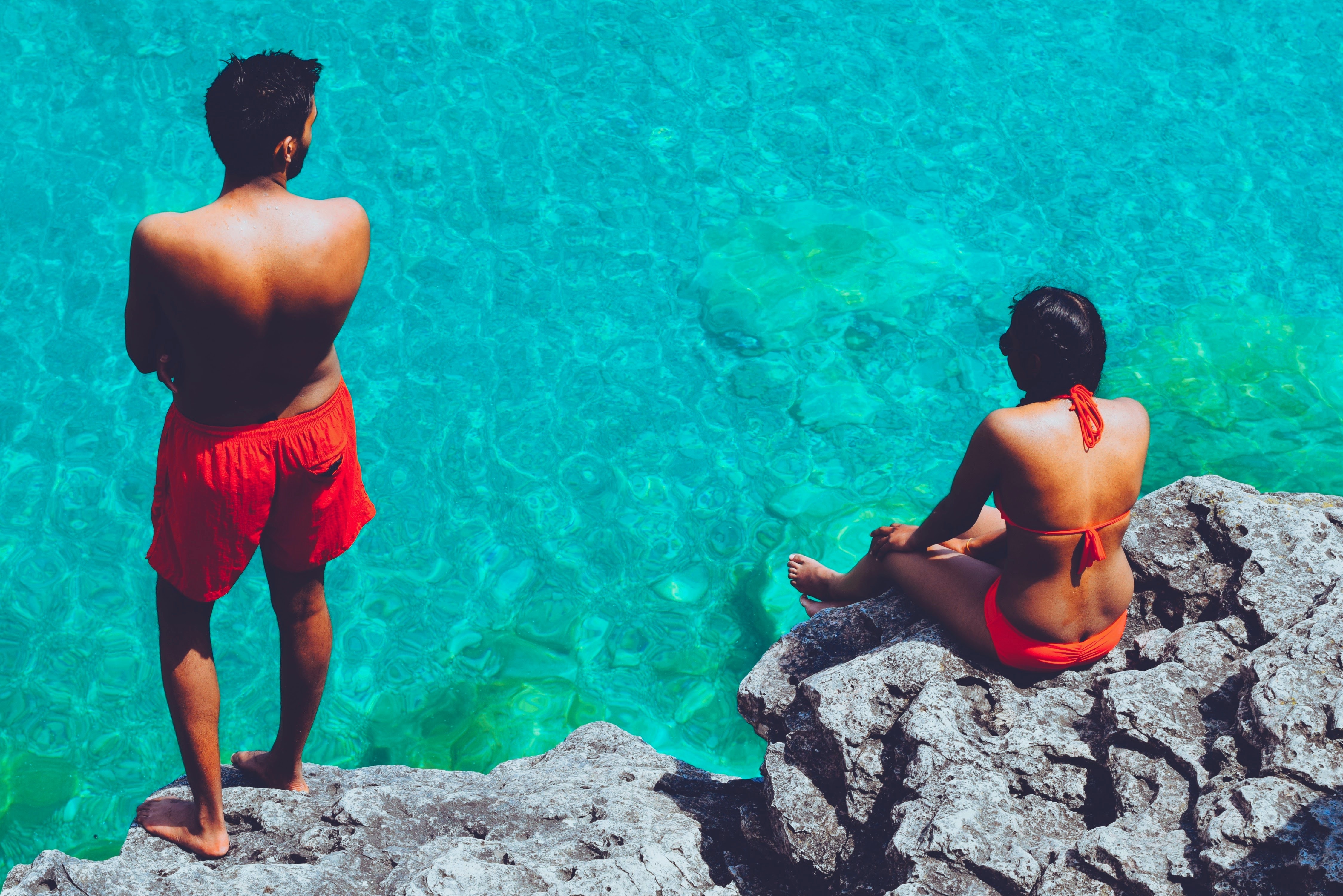


It’s a peculiar experience watching a blockbuster unfold on the big screen, only to realise halfway through that you’ve been there. Not metaphorically, but quite literally, beneath those same jagged cliffs, in the shallows of that same jade-green bay. For visitors to Thailand’s Krabi province this year, the déjà vu is warranted. Jurassic World Rebirth, the latest chapter in the dinosaur epic, has returned the franchise to familiar territory, albeit one it never actually visited before: prehistoric Asia.
The filmmakers had options. Panama, Mauritius, Costa Rica. But in the end, it was Krabi, raw, tropical and ancient, that won them over. A choice that makes a certain sense. There’s something primal about this coastline. The limestone cliffs don’t just rise, they loom. Gnarled and towering, they were forged some 90 million years ago, when much of this region lay underwater, long before continents collided and tectonic violence lifted the seafloor skyward.

If dinosaurs did roam again, it’s not hard to imagine them doing it here.
One suspects that’s exactly what the producers thought. In Rebirth, Krabi becomes both refuge and threat, a lush, unpredictable frontier where humans are once again the vulnerable species. Scarlett Johansson stars as Zora Bennett, a genomicist on a morally ambiguous mission to retrieve dinosaur DNA that might help save mankind. But it’s the landscape that steals the show.
Much of the filming took place around Ao Nang and Railay, with scenes shot deep in the mangroves and jungle-fringed rivers. The finale plays out on the waters of Klong Root, a startlingly clear freshwater canal that snakes through the rainforest like a forgotten tributary of the past. It’s a place, like much of Krabi, where time seems to lose its footing.
Not far from here, perched quietly on a bay that faces the Hong Islands, is Banyan Tree Krabi, a resort that has become something of an unofficial host to the film’s new fans. General Manager Haruethai Maneerat admits the cinematic attention was expected. “The number of guests who’ve told me it feels like another world here, I’ve lost count,” she says, her tone more amused than boastful. “There’s a purity to the place that you don’t find easily anymore.”

Rather than capitalise on its cameo role, the resort has taken a softer approach. A newly introduced experience, called “Jurassic Explorer,” invites families and curious guests to retrace the film’s locations, by longtail boat to the island coves, or by guided tour to the film’s inland backdrops. There’s even a hand-illustrated guidebook mapping it all out for the more independent traveller.
But this isn’t a theme park. There are no animatronics, no roaring replicas. Instead, the focus remains on the real: the rippling aquamarine, the strange karst formations, the waterfall hikes that have long drawn explorers of a quieter kind.
There are lighter touches, of course. The kitchen team has produced a culinary homage to Johansson’s Thai food preferences, reinventing the fiery laab gai as a dish dubbed “Jurassic Laab – A Star’s Wild Bite.” The spicy minced salad comes with a choice of chicken or beef and is served with a confident heap of toasted rice powder and fresh herbs. It is not for the faint-hearted.

Elsewhere on the menu, a dish titled “Fossil Egg” arrives with less flair and more humour: a deep-fried sausage-wrapped egg that wouldn’t be out of place at a British village fair, were it not plated with tropical greens.
And then there are the cocktails. “The Raptor Forest” blends Midori, lemongrass syrup and ginger ale, tangy and oddly refreshing, while “T-Rex Rampage” relies on Campari’s bitter backbone for drama. Neither is subtle. But both seem perfectly at home here, where the line between playful and sublime is rarely straight.
Perhaps what’s most remarkable is how little this cinematic moment has changed Krabi. In many places, a blockbuster would leave behind a trail of billboards and bus tours. But Krabi is different. The terrain itself resists reinvention. It is too old, too formed by time and tide to be anything but what it is.

There is no rush here. No glitz, no grind. Just the slow, persistent rhythm of fishing boats tracing old routes, of clouds unraveling over jungle ridges, of quiet waves brushing the roots of mangrove trees.
For those who know it, Krabi has always felt like the kind of place that belongs in a story. Now it has one more to tell.
And as the lights come up in cinemas around the world, audiences may find themselves wondering not about the dinosaurs, but about the landscape. Where is that place? Does it really exist?
It does. But you’ll have to go quietly. It’s been here far longer than any of us.


