


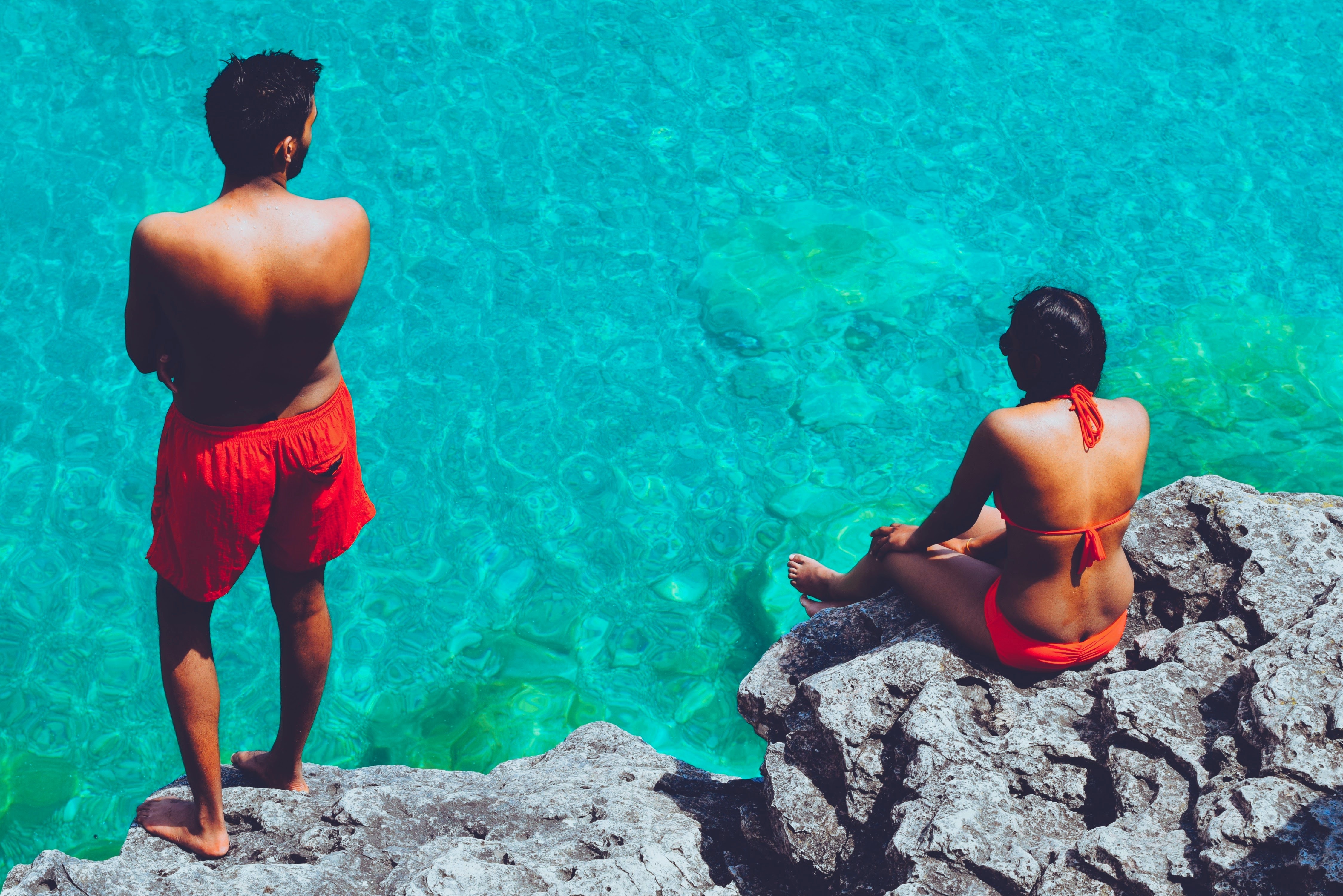


There are places in the world where the horizon seems to dissolve. The Maldives is one of those rare settings, where sky and sea often melt into a single wash of turquoise, pale gold and shifting light. Spend even a few hours on a remote island and you begin to understand why people have tried for centuries to put words to its stillness. The islands have a character that feels older than the maps that define them and deeper than the brochures that attempt to summarise them.
It is within this setting that a series of private islands is taking shape. SIX & SIX PRIVATE ISLANDS MALDIVES is preparing to open its first resort in 2026, but the story begins long before construction crews arrived. The idea was born from the desire to reconnect visitors with the rhythms of island life rather than replicate what has already become common across the archipelago. Many resorts in the region are eye catching and polished, yet the experience can feel familiar from brand to brand. SIX & SIX set out to create something that felt rooted in Maldivian culture, with each island shaped by its own traditions, stories and physical character.
The company’s CEO and co founder, Laith Pharaon, has spent years in the world of hospitality through his work with Orca Holding. His past projects have included well known names in travel, yet here he wanted to slow everything down. Sitting with him as he talks about his vision, the pace of his voice mirrors the place he is describing. He speaks less about buildings and more about people. He talks about fishermen who still know how to read the sea by touch rather than by screen, and elders who can recall the history of each atoll through memory alone.

He explains that the islands inspired a framework known as the Rayyithun philosophy. In the local language, Rayyithun refers to the People of the Islands. It serves as a kind of cultural backbone, built around archetypes of daily life. There are fishermen who rise before dawn, drummers who give rhythm to ceremonies, toddy tappers who climb coconut palms with ease, builders who pass skills across generations, and mentors who guide young people in their communities. The idea is not to decorate the resorts with cultural references, but to build each island in a way that reflects authentic local identity. Visitors, and potential homeowners, become part of the setting rather than observers of it.
SIX & SIX PRIVATE RESIDENCES sits within this wider vision. Only a small collection of homes will be created on each of the six islands planned across six years. Some will be over water, others set along the beach, and all shaped by local architectural influences. The residences are intended for a narrow group of people who feel drawn to the idea of living quietly within nature rather than living above it. Some may be investors. Others may be families who want a retreat where the loudest sound is the movement of the tide against the stilts of their home.
The Director of Private Residences, Marco Bonini, describes how interest in high end travel has shifted. After more than two decades in luxury hospitality, working with projects that span from the Maldives to Europe and the Caribbean, he has watched travellers become more reflective in what they are looking for. According to him, people are seeking simplicity, privacy and a gentler kind of sophistication. Or to put it another way, a sense of place that feels genuine rather than performed.
He talks about arrivals that feel like homecomings. No check in desks. No fuss. Technology fades into the background. Staff step back so the island can speak for itself. From his perspective, these details are not luxuries but necessities in a world that feels increasingly loud. A home in this setting is not about grandeur, but about stillness. It is about the way sunlight filters through palm fronds, and how the scent of saltwater settles in the air at dusk. Architecture becomes a frame for nature rather than a distraction from it.

Sustainability is a part of the story, not as a marketing device but as a practical requirement. More than 80 percent of travellers with higher spending power now prefer brands that reflect their values, yet the team behind SIX & SIX seems less concerned with statistics than with the simple truth that the islands are fragile. Rising sea levels, saltwater intrusion and the pressure of tourism make the Maldives one of the world’s most vulnerable destinations. The company intends for all its islands to gain EarthCheck certification, integrating environmental planning from the start rather than treating it as an add on. This includes how materials are chosen, how waste is managed and how communities are engaged well before each opening.
The journey begins with Rah Gili Maldives, which is planned to open in February 2026. It sits in the South Malé Atoll, a short forty minute boat ride from Velana International Airport. Yet despite its closeness to the capital, Rah Gili feels sheltered. Its waters sit beside a dolphin sanctuary, and it is not unusual to see a small pod glide past the coastline in the early morning. The residences here lean into a playful, bohemian character. They draw from natural textures and rely on craftsmanship rather than imported design trends. There is talk of six dining spaces and a calendar of cultural events, but the island itself remains the main attraction.
Later in 2026, Don Maaga Maldives will follow. Although details are still emerging, the island is expected to feel different from Rah Gili. Each setting in the SIX & SIX journey will have its own narrative and its own architectural language, shaped by its particular history and ecological features. The company’s philosophy avoids uniformity. Instead, each island will grow into its own identity, linked by the wider cultural framework of Rayyithun but visually and experientially distinct.

Laith Pharaon describes the overall ambition as a movement towards quiet luxury. The phrase has been used heavily across the travel industry in recent years, but the way he uses it feels less like a trend and more like an observation. Quiet luxury, in its truest form, is about intention and authenticity. It is less concerned with what is new and more focused on what is meaningful. In the case of SIX & SIX, it is about creating places that feel permanent. Homes that can be lived in, cared for and passed down rather than built for show.
There is a sense, while listening to him speak, that the islands themselves have set the pace of the project. He talks about time slowing, and about the way the Maldivian landscape can teach you to pay attention. Islanders have understood this for generations. Visitors often notice it only after a few days. Phones stay on silent. Shoes stay off. Light changes colour through the day in ways that encourage you to look up from the usual rush of life.
Standing on one of the beaches at low tide, it is easy to imagine what future residents might experience. A house set back among palms. A deck that looks out across water so clear it mirrors the sky. A pathway that leads directly onto sand that feels warm in the early morning. Silence broken only by birds or by the faint sound of a boat engine in the distance. The simplicity of it is what stays with you. It is not extravagant or overly designed. It is calm.
The Maldives has long been associated with luxury, yet what makes these islands remarkable is not the comfort they offer but the sense of perspective. Here, the world slows down enough for you to notice the shape of a shell or the way the tide line shifts across the beach from one morning to the next. The story of SIX & SIX PRIVATE ISLANDS sits within this larger narrative of nature, culture and time. It is an attempt to create something that respects the setting rather than overwhelms it.
For those who eventually call a SIX & SIX residence their own, it will not simply be an address. It will be a return to something quieter and more rooted. A place where simplicity leads the way. A reminder that the world is wider and older than the pace most of us keep. And perhaps that is the real luxury of the Maldives. Not the villas or the views, but the chance to slow down long enough to feel part of something beyond ourselves.


